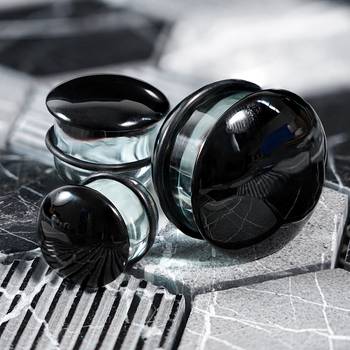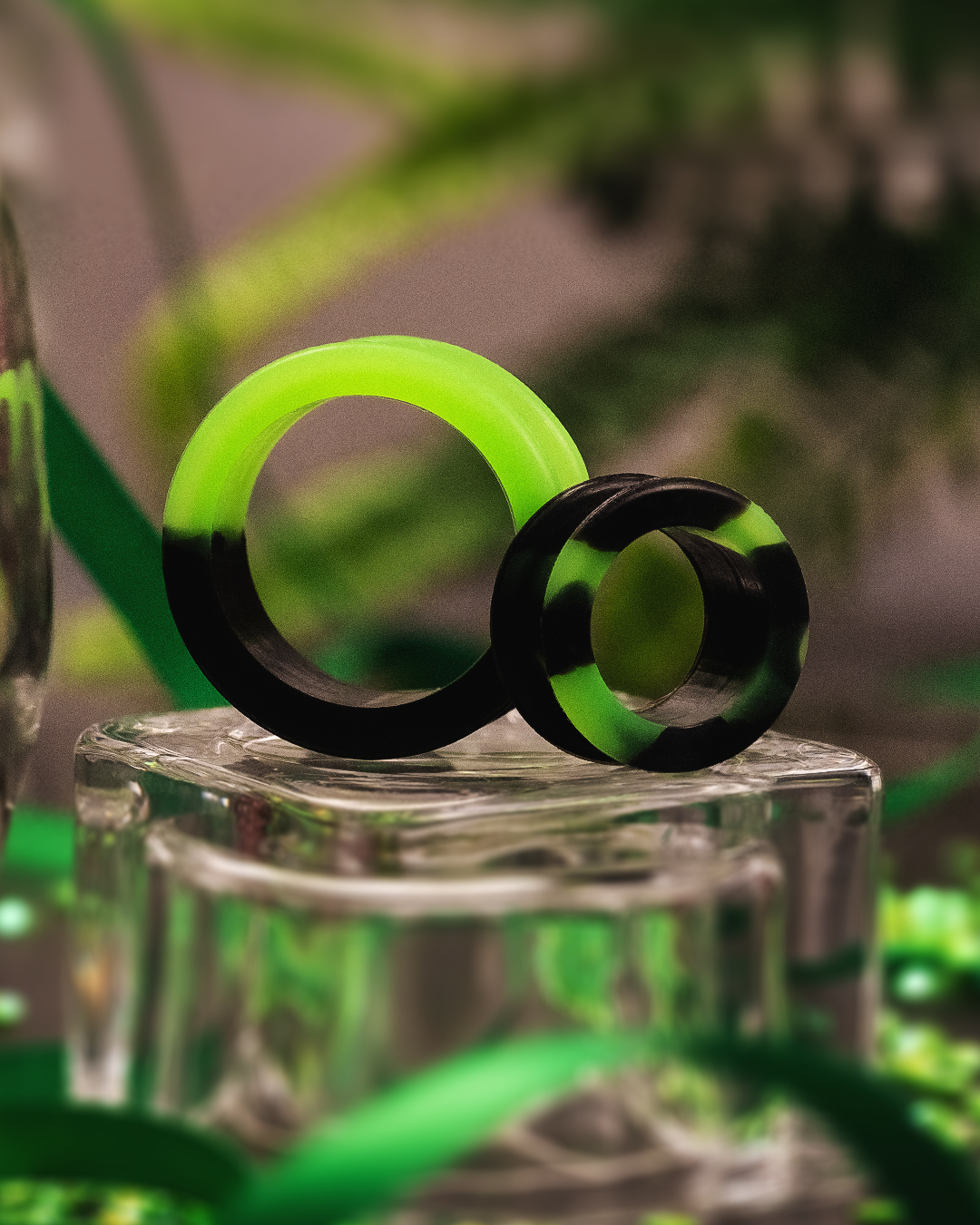

Black Silicone Ear Tunnel
from
£3.00


Confused about Ear Gauge Sizes? Read our guide and understand sizing for plugs & gauges.
When it comes to body jewellery, knowing exactly what material you're wearing matters. Terms such as “titanium” and even “implant grade” are easy to use, but without the right documentation, they don't necessarily tell you much about where that material has come from or what it actually contains.
At Custom Plugs, our ASTM F-136 titanium body jewellery is backed by material documentation, including Mill Certificates and REACH compliance documentation. But what are these documents, and why should you care?
ASTM F-136 is a recognised material specification for Ti-6Al-4V ELI titanium alloy used for surgical implant applications.
For body jewellery, ASTM F-136 titanium is valued for being lightweight, durable, highly corrosion resistant and biocompatible, making it an excellent material for high-quality piercings.
However, simply describing jewellery as “implant-grade titanium” isn't the same as being able to demonstrate what material was actually used. That's where documentation becomes important.
REACH is legislation covering the use and restriction of certain chemical substances in products.
This is particularly relevant to jewellery because it is designed to be worn in prolonged, direct contact with the body. Applicable REACH restrictions can cover substances including nickel, lead and cadmium.
REACH documentation therefore provides another layer of confidence when we're sourcing body jewellery, helping us check that products meet applicable chemical requirements rather than relying solely on what a manufacturer tells us.

A Mill Certificate, also known as a Mill Test Certificate (MTC), is documentation relating to the raw material used to manufacture the jewellery.
Depending on the certificate supplied, it can include information such as:
The titanium grade and specification
Chemical composition
Batch or heat number
Material test results
Manufacturing or material traceability
For us, this is important because it provides supporting evidence that the titanium we've sourced is actually the material it is being sold as.


-v1657710003014.jpg?512x640&transform=resize=350)